How we helped Google recognise Spicrawl: our first month of SEO
Google corrected our brand name to a similar word for about a month. Here is what we changed, what helped, and what we would do first next time.
By Ellie, Web developerPublished 5 min read
On this page
- 1. Started with the technical SEO basics
- 2. Listed Spicrawl on MCP registries
- 3. Made our brand information consistent
- 4. Worked on product and startup directories
- 5. Created social media profiles and started posting
- 6. Researched keywords and planned content
- 7. Monitored everything
- What we learned from this experience
- A small milestone, not the finish line
When we launched Spicrawl on September 25, 2026, I noticed something that felt a little strange.
Whenever I searched for our brand name, Spicrawl, Google kept correcting it to Sprawl. Our website wasn't showing up properly, even when I searched for the exact brand name.
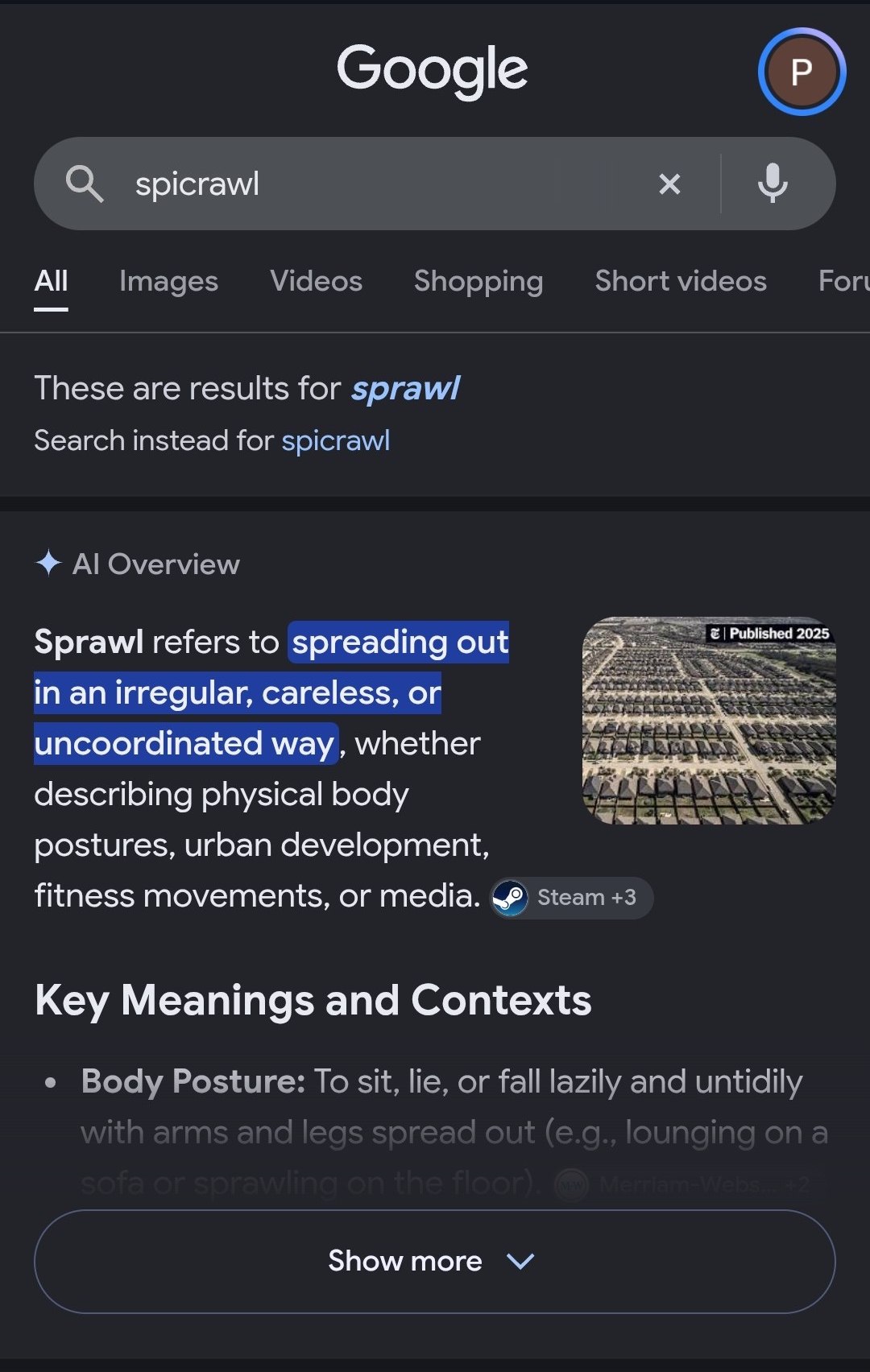
At first, I thought this was just normal for a new website. And in a way, it was. Google didn't really know our brand yet.
I honestly didn't know much about SEO at that point. I wasn't an SEO expert (and I'm still learning), and I had no proper roadmap. I started researching, reading, trying things, making mistakes, and slowly understanding how search engines discover and recognise a new website.
After around a month of work, we started seeing some progress.
Is this a huge SEO achievement? Probably not. There is still a lot of work left. But for me, it was a small milestone worth sharing.
Here are some things I worked on and learned along the way.
1. Started with the technical SEO basics
I first focused on making sure search engines could properly discover and understand our website.
Some of the things I worked on:
- Page titles and meta descriptions.
- Sitemap and robots.txt.
- Canonical URLs and duplicate-page issues.
- Making important pages discoverable.
- Fixing indexing issues in Google Search Console.
- Making the website accessible to AI crawlers and tools through resources like
llms.txtand machine-readable discovery files.
The goal was simple: make it easier for search engines and AI systems to understand what Spicrawl is.
I also learned that submitting a page for indexing doesn't guarantee Google will index it. Sometimes Google discovers a page but chooses not to index it.
2. Listed Spicrawl on MCP registries
Since Spicrawl has an MCP server, getting it listed in relevant MCP directories was another important part of the work.
These are the platforms I worked on:
- Official MCP Registry — my first priority and the most important listing.
- Glama
- Smithery
- LobeHub MCP Marketplace
- cursor.directory
Some submissions are still pending.
One thing I learned the hard way: Submit to the Official MCP Registry first, then wait at least a week or two before manually submitting to other directories.
Many MCP directories automatically fetch listings from the official registry. Check the others after a week or two; you may find that most listings are already there.
I made the mistake of submitting manually first and adding the official listing later. This resulted in duplicate listings on some platforms.
So, save yourself that little headache: official registry first, then check the others.
3. Made our brand information consistent
I realised that Google needs consistent information to understand that different profiles and websites belong to the same brand.
I worked on:
- Adding social media links to our website.
- Updating our About page.
- Adding our YouTube channel to structured brand information.
- Keeping our brand name and description consistent across platforms.
Small details, but they help build a clearer picture of a brand online.
4. Worked on product and startup directories
We also started building Spicrawl's presence across product, startup, and software directories.
Some platforms we explored or submitted to:
- G2
- SaaS Hub
- SourceForge
- AlternativeTo
- Make.rs
- StackShare
- GoodFirms
- Siteefy
- PeerPush
- Website Hunt
- Startup Inspire
- OpenHunts
Most of the marketplace listings were handled by my colleague, while I also explored and worked on several directories.
There are many more to explore. My suggestion is to focus on platforms relevant to your product and audience rather than submitting everywhere just for backlinks.
5. Created social media profiles and started posting
I also worked on creating and maintaining Spicrawl's social media presence.
Social profiles can appear in Google search results quite quickly. Having consistent brand names, profile URLs, descriptions, and regular posts gives people more ways to discover your brand.
You don't need to post every day. Just start building your presence and keep it active.
6. Researched keywords and planned content
I started exploring what people were actually searching for around web scraping and AI agents.
Some topics I explored:
- Web scraping for RAG and LLMs.
- Scraping dynamic websites.
- Web scraping 403 errors.
- Scraping websites with login.
- HTML vs Markdown for LLMs.
- Web scraping vs APIs.
This helped me understand that writing content isn't just about publishing more blogs. It's about answering questions people are already searching for.
7. Monitored everything
I used Google Search Console and Bing Webmaster Tools to understand what was happening with our website.
I checked:
- Which pages were indexed or not indexed.
- Search impressions and clicks.
- Indexing and canonical issues.
I also explored IndexNow to notify search engines about updated URLs.
These tools helped me understand what was happening instead of simply guessing.
What we learned from this experience
Looking back, here are a few things I'd suggest to anyone launching a new brand:
- Set up Google Search Console and Bing Webmaster Tools early.
- Get your technical SEO basics right.
- Keep your brand information consistent across platforms.
- Submit to the Official MCP Registry first if you have an MCP server.
- Explore relevant product and startup directories.
- Create social profiles and keep them active.
- Research search queries before planning blog content.
- Be patient. Indexing and brand recognition take time.
A small milestone, not the finish line
Today, when I search for Spicrawl, Google still shows a "Did you mean..." suggestion, but it no longer autocorrects the brand name. Instead, it shows information about Spicrawl, including our website, GitHub, and listings across other platforms.
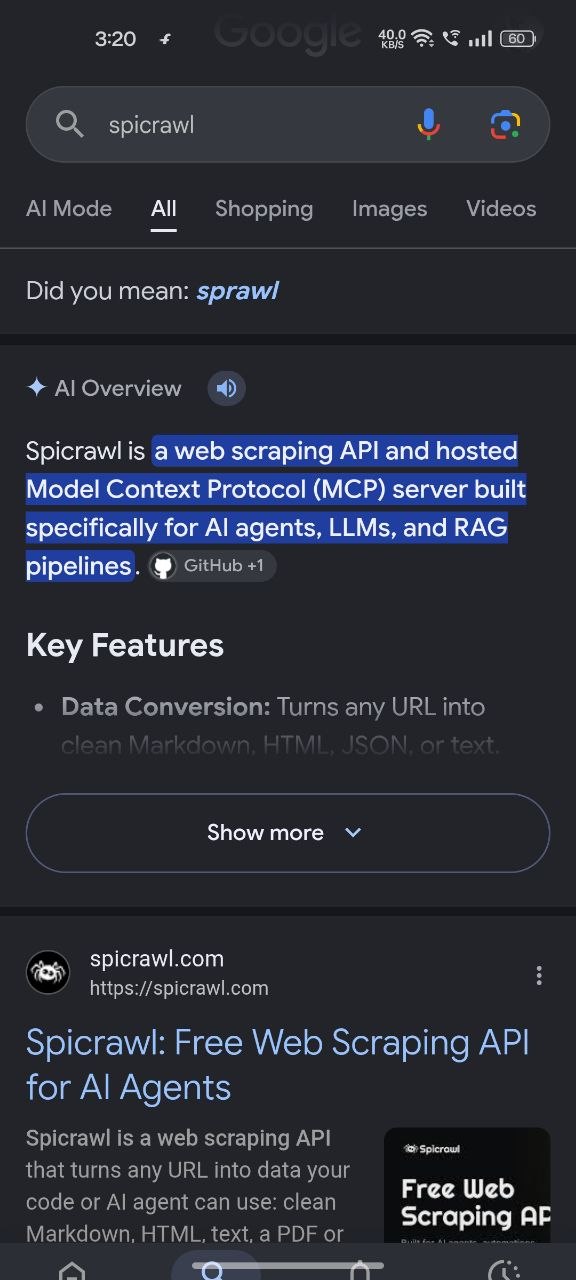
That's a small change, but it means a lot to us. We know how much research, experimentation, and effort went into reaching this point.
We don't think one particular SEO task fixed everything. It was a combination of small improvements over time.
And honestly, this is just the beginning. There is still so much more to learn, experiment with, and improve.
We're sharing this experience because other people launching their first product or website might be facing the same challenge.
If you're building a new brand, don't get discouraged if Google doesn't recognise your name immediately. Start with the basics, keep building your online presence, and give it time.
We're still learning, experimenting, and growing with Spicrawl.
Frequently asked questions
How long does it take Google to recognise a new brand name?
There is no fixed time. For us it took about a month of small fixes and waiting. A new site has no history, so Google crawls it slowly at first. Keep the site easy to crawl, keep your brand details consistent, and check Search Console for problems.
Why does Google change my brand name to another word?
When Google does not know a name, it may correct it to a more common word that looks similar. In our case Spicrawl became Sprawl. The autocorrection stopped after about a month, as the site and the brand signals became clearer. A "Did you mean" suggestion can still appear.
Does submitting a URL to Google guarantee indexing?
No. Requesting indexing only asks Google to look at the page. Google may still decide not to index it. Read the reason in Search Console instead of submitting the same URL again and again.
Should I submit my MCP server to every directory?
No. Submit to the Official MCP Registry first, then wait one or two weeks. Many MCP directories copy their listings from the official registry, so your server may already be listed. Submitting everywhere by hand can create duplicate listings.
Do directory listings help SEO?
They can help people find your product, and some links may help search engines discover the site. The effect on rankings is usually small. Choose directories that your audience uses instead of collecting links everywhere.
Does llms.txt help Google rankings?
No. Google says Google Search does not use llms.txt, and that the file neither helps nor hurts rankings there. It can still help other AI tools find your pages. We explain the file in our llms.txt guide.
Sources
Product details were checked against each company’s own website and docs. Products change: if something here is out of date, email support@spicrawl.com.